Skip to product information
1 of 1

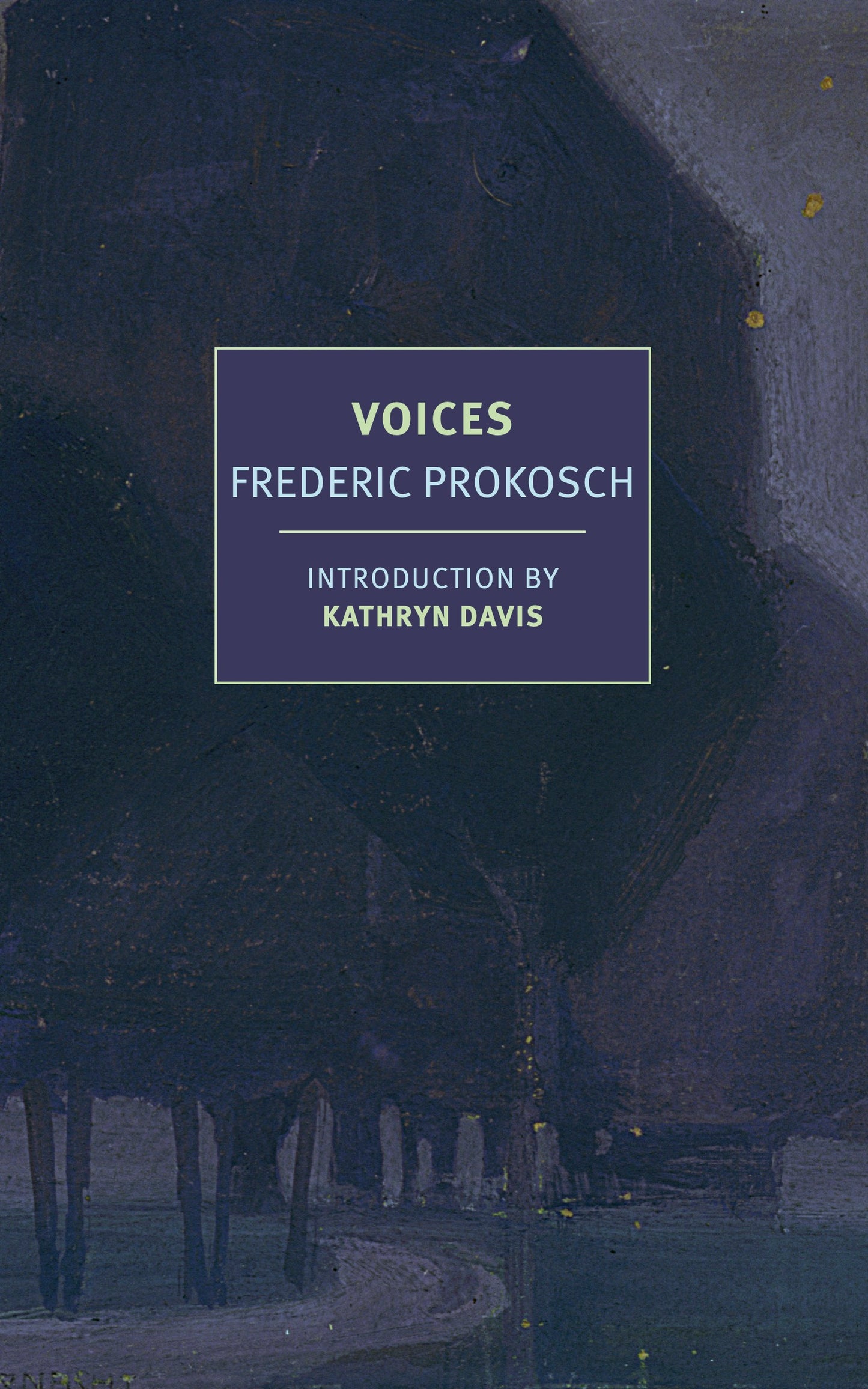
Voices

Voices

by Frederic Prokosch, introduction by Kathryn Davis

Regular price $19.95
Regular price Sale price $19.95
Format

Frederic Prokosch was a fantasist. His first novel, The Asiatics, was a stylish account of a man hitchhiking across an Asia that was more dream than reality. Praised by T. S. Eliot, Thomas Mann, and W. B. Yeats, it was a tremendous success, never to be replicated in Prokosch's long career. In the 1940s, he moved to Europe, away from what he called the "middle-class and fancy dullness" of midcentury American letters, writing novels of a highly romantic kind, playing squash and tennis, collecting butterflies, and printing deluxe limited editions of poems he admired.

In 1982, Prokosch returned to the literary limelight with Voices—a self-proclaimed memoir framed by his childhood in Middle America and his old age in the South of France, made of short chapters about his encounters with famous figures, whose every word he seems to recall. Voices, too, is a work of fantasy. But if Prokosch's portraits are not strictly true to life, they come alive as few portraits do. Whether he is playing tennis with Ezra Pound or retrieving Marc Chagall's wallet from the Grand Canal, sharing a beer with Bertolt Brecht or a steam bath with W.H. Auden, Prokosch hypnotizes the reader with his ability to capture these artists' cadences and characters, creating a masterpiece of imaginative memoir.

Additional Book Information

Series: NYRB Classics
ISBN: 9798896230120
Pages: 360
Publication Date:

Praise

Prokosch's Voices is an astonishing book.
—Simon Leys

Mr. Prokosch’s gift is one which strikes me as astonishing. It is rich and immediate . . . the talent of a real visionary, and often magical.
—W.B. Yeats

I can't think of any other writer who captures the essence of another human being so swiftly and so wickedly.
—Kathryn Davis

Prokosch never taught school; never sought prizes or foundation grants; never played at literary politics. He seems to have been more interested in the works or voices of others than in himself as a person (as opposed to himself as a writer), a characteristic that tends to put him outside contemporary American literature; and contemporary American literature, sensing this indifference to the games careerists play, extruded him entirely from the canon. He was like no one else.
—Gore Vidal, The New York Review of Books

View full details
  • Shopping for someone else but not sure what to give them? Give them the gift of choice with a New York Review Books Gift Card.

    Gift Cards 
  • A membership for yourself or as a gift for a special reader will promise a year of good reading.

    Join NYRB Classics Book Club 
  • Is there a book that you’d like to see back in print, or that you think we should consider for one of our series? Let us know!

    Tell us about it